
If you’re pregnant or preparing for birth, you may have heard the term “crowning.” It’s one of the most talked-about — and often misunderstood — moments of labor.
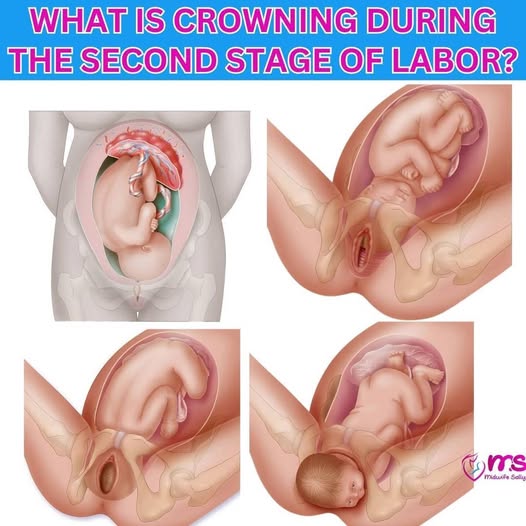
Here’s what it really means and what every mom-to-be should know
1️⃣ What Is Crowning?
Crowning happens during the second stage of labor, when the baby’s head becomes visible at the vaginal opening and stays visible between contractions.
It means your baby is very close to being born.
2️⃣ What Does It Feel Like?
Many women describe crowning as:
• A strong stretching or burning sensation
• Intense pressure in the pelvic area
• A feeling of needing to push
Some call it the “ring of fire.” While it can feel intense, it usually lasts a short time before the baby’s head is delivered.
3️⃣ Why Controlled Pushing Matters
Your healthcare provider may guide you to:
• Push slowly
• Breathe through contractions
• Pause briefly
This helps the skin stretch gradually and may reduce tearing.
4️⃣ Can Tearing Happen?
Yes, vaginal tearing can occur during crowning. However:
• Many tears are minor and heal well
• Warm compresses and perineal support may reduce risk
• Perineal massage during late pregnancy may help improve flexibility
Your provider will assess and treat any tears if needed.
5️⃣ Epidural or No Epidural?
If you have an epidural, you may feel pressure but less pain. Without one, sensations may be stronger — but every woman’s experience is different.
6️⃣ How to Prepare
✔ Practice breathing techniques
✔ Strengthen pelvic floor muscles (Kegels)
✔ Discuss your birth plan with your provider
✔ Stay informed but flexible
🚨 Important Reminder
Every birth is unique. Crowning is a normal and powerful part of labor — but medical support is essential for safety. Always follow the guidance of your obstetrician, midwife, or healthcare team.
The Bottom Line 💕
Crowning is the final stretch before meeting your baby. It may feel intense, but it’s a sign your body is doing exactly what it was designed to do.