Gluten is a protein found in wheat, barley, and rye. For many people, it’s harmless. But for others, it can trigger uncomfortable — and sometimes serious — symptoms.
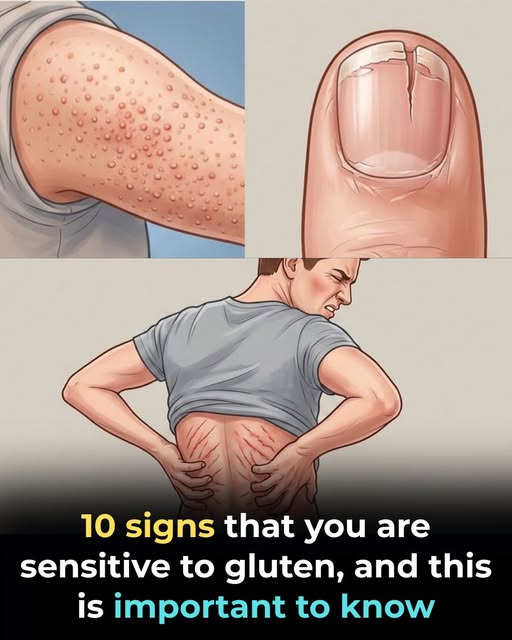
There are two main conditions linked to gluten problems:
• Celiac disease (an autoimmune condition)
• Non-celiac gluten sensitivity
Let’s look at the warning signs 👇
🚨 1️⃣ Ongoing Digestive Problems
• Bloating
• Gas
• Diarrhea
• Constipation
• Stomach pain
If these symptoms happen often after eating bread, pasta, or baked goods, gluten may be a trigger.
😴 2️⃣ Constant Fatigue
Feeling unusually tired even after sleeping well can sometimes be linked to poor nutrient absorption — especially in people with celiac disease.
🧠 3️⃣ Brain Fog & Headaches
Some people report:
• Difficulty concentrating
• Memory issues
• Frequent headaches
These may improve after removing gluten (if sensitivity is present).
🩸 4️⃣ Unexplained Anemia
Celiac disease can damage the small intestine, making it harder to absorb iron — leading to low iron levels.
🦴 5️⃣ Joint Pain
Chronic inflammation triggered by gluten in sensitive individuals may cause joint discomfort.
🧴 6️⃣ Skin Issues
A very itchy, blistering skin rash called Dermatitis herpetiformis is strongly linked to celiac disease.
🧒 7️⃣ Growth or Development Issues in Children
In kids, untreated celiac disease can cause delayed growth due to nutrient malabsorption.
⚠️ When to Take It Seriously
See a doctor if you experience:
• Persistent digestive symptoms
• Unexplained weight loss
• Severe fatigue
• Family history of celiac disease
• Chronic anemia
Important:
Do NOT stop eating gluten before testing for celiac disease. Blood tests require gluten consumption for accurate results.
🥖 Gluten Sensitivity vs. Celiac Disease
Celiac disease is an autoimmune condition that can damage the intestines.
Non-celiac gluten sensitivity causes symptoms but does not damage the intestine in the same way.
Both should be taken seriously — but they are not the same.
🌟 The Bottom Line
Not everyone who feels bloated has a gluten problem. But persistent symptoms after eating gluten-containing foods deserve attention.
If you suspect an issue, talk to a healthcare provider for proper testing — self-diagnosing can lead to unnecessary dietary restrictions.