
Cervical Cancer often develops slowly and may not cause obvious symptoms in the early stages. Because of this, many women ignore subtle warning signs until the condition becomes more serious. Paying attention to small changes in your body can help detect problems earlier.
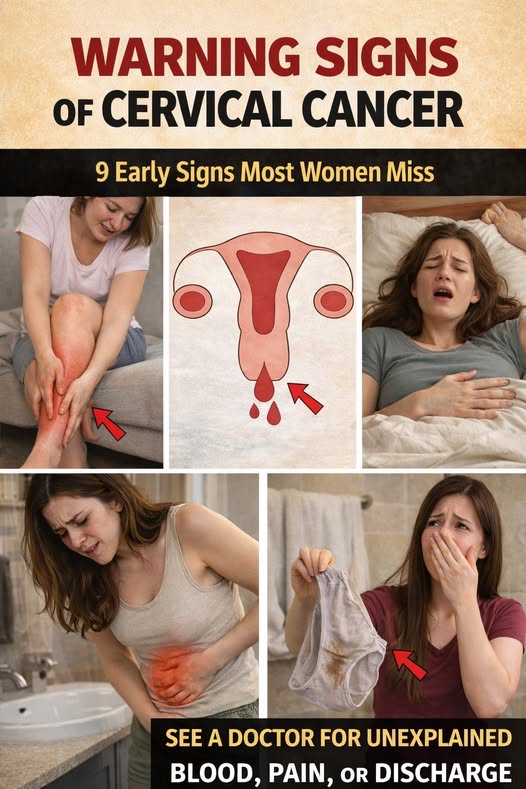
Here are 9 early symptoms doctors say women should never ignore:
1️⃣ Unusual Vaginal Bleeding
Bleeding that happens between periods, after sex, or after menopause can be an early warning sign. Any unexpected bleeding should be checked by a doctor.
2️⃣ Pain During Intercourse
Persistent pain or discomfort during intimacy may indicate irritation or abnormalities in the cervix.
3️⃣ Unusual Vaginal Discharge
Watery, thick, or foul-smelling discharge—especially if it contains traces of blood—may signal a problem that needs medical attention.
4️⃣ Pelvic Pain
Pain or pressure in the pelvic area that lasts for days or weeks without a clear cause could be related to cervical issues.
5️⃣ Longer or Heavier Periods
Periods that suddenly become much heavier or last longer than usual may be linked to changes in the cervix.
6️⃣ Pain in the Lower Back or Legs
As the condition progresses, it may cause persistent lower back pain or leg discomfort due to pressure on nearby nerves.
7️⃣ Frequent Urination or Discomfort
Some women experience bladder irritation or the need to urinate more often.
8️⃣ Unexplained Weight Loss
Losing weight without trying can sometimes occur with several types of cancer, including cervical cancer.
9️⃣ Constant Fatigue
Feeling extremely tired all the time—even with enough rest—can happen when the body is fighting disease.
🩺 Why Regular Screening Matters
Doctors recommend routine screening tests such as the Pap Smear, which can detect abnormal cells before they become cancerous.
Most cases of cervical cancer are linked to infection with Human Papillomavirus (HPV), which is why vaccination and regular checkups are important.
✅ Important: These symptoms can also be caused by other conditions, but if any of them persist, it’s important to seek medical advice promptly. Early detection greatly improves treatment outcomes.