
A neck hump (sometimes called a “buffalo hump”) is a buildup of fat or a change in posture at the base of the neck. While it can be caused by simple posture issues, in some cases it may also signal underlying health problems.One condition associated with this is Dowager’s Hump, which often develops from poor posture or weakening of the spine.
Another possible cause is Cushing’s Syndrome, which can lead to fat accumulation in the upper back and neck.
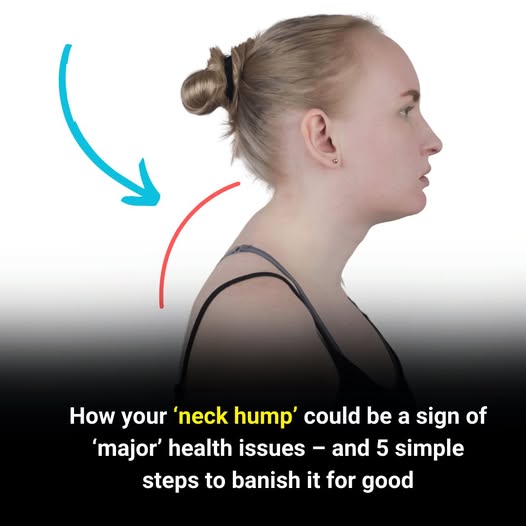
🧠 Possible Causes of a Neck Hump
- Poor posture (long hours on phones or computers)
- Excess body fat
- Weak upper-back muscles
- Osteoporosis affecting the spine
- Hormonal conditions such as Cushing’s Syndrome
✔️ 5 Steps That May Help Reduce or Prevent It
1️⃣ Improve Posture
Keep your head aligned with your shoulders and avoid leaning forward when using phones or laptops.
2️⃣ Strengthen the Upper Back
Exercises that target the shoulders and upper back can help support the spine.
Helpful movements include:
- Rows
- Shoulder blade squeezes
- Wall posture exercises
3️⃣ Stretch the Chest and Neck
Tight chest muscles pull the shoulders forward, worsening the hump.
Simple stretches can gradually restore posture.
4️⃣ Maintain a Healthy Weight
Excess fat can accumulate around the neck and upper back, making the hump more noticeable.
Regular activity and balanced nutrition can help.
5️⃣ Get Medical Advice if It Grows
If the hump appears suddenly, becomes painful, or continues to enlarge, it’s important to see a doctor to rule out hormonal or bone conditions.
✅ What a healthy posture should look like:
- Ears aligned over shoulders
- Shoulders relaxed (not rounded forward)
- Upper back straight rather than curved
💡 Good news: Many neck humps caused by posture can improve with consistent exercise, stretching, and better daily habits.