
We often think of mental health as something that shows up only in our thoughts or emotions, but the body usually speaks first. When stress builds up and rest is ignored, physical symptoms can appear as warning signs that your mind needs a break. Listening to these signals can help prevent burnout and protect your overall wellbeing.
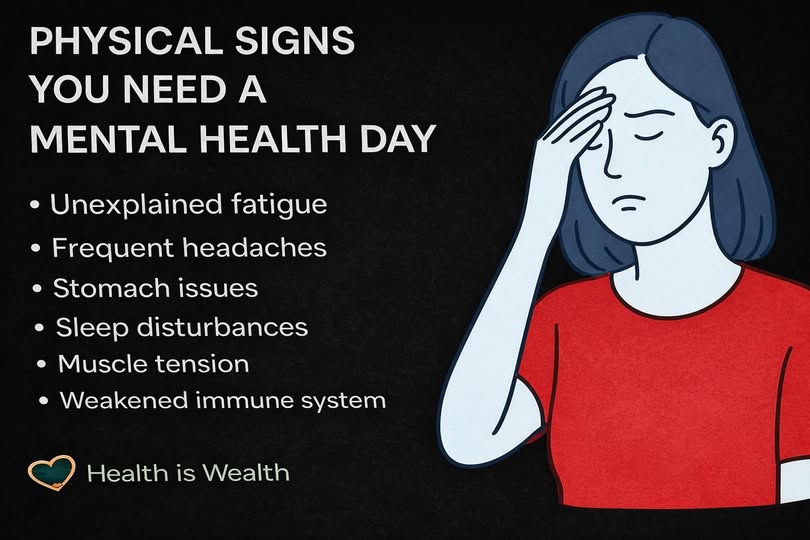
Constant fatigue that doesn’t improve with sleep is one of the most common signs. When your nervous system is overwhelmed, your body stays in a state of alert, making true rest difficult even after a full night in bed.
Frequent headaches or a tight feeling around the head and neck often come from prolonged stress and muscle tension. The body holds emotional strain physically, especially in the shoulders, jaw, and upper back.
Digestive issues such as bloating, stomach discomfort, or changes in appetite can be linked to stress and anxiety. The gut and brain are closely connected, so mental overload can easily affect digestion.
Muscle aches without clear physical cause may also signal mental exhaustion. When stress hormones remain high, muscles stay tense, leading to soreness and stiffness.
Getting sick more often is another red flag. Chronic stress can weaken the immune system, making the body more vulnerable to colds, infections, and slow recovery.
Sleep disturbances, including trouble falling asleep or waking up feeling unrefreshed, are strong indicators that your mind hasn’t had time to reset.
Changes in breathing, such as shallow or rapid breaths, often happen when anxiety is high. This pattern can lead to dizziness, chest tightness, or a constant feeling of unease.
Ignoring these signs can push the body toward burnout. Taking a mental health day doesn’t mean being unproductive—it means giving your nervous system time to recover. Rest, gentle movement, fresh air, hydration, and unplugging from stress can help restore balance and leave you healthier in the long run.