It sounds unbelievable — but the food in question is something many families rely on daily.
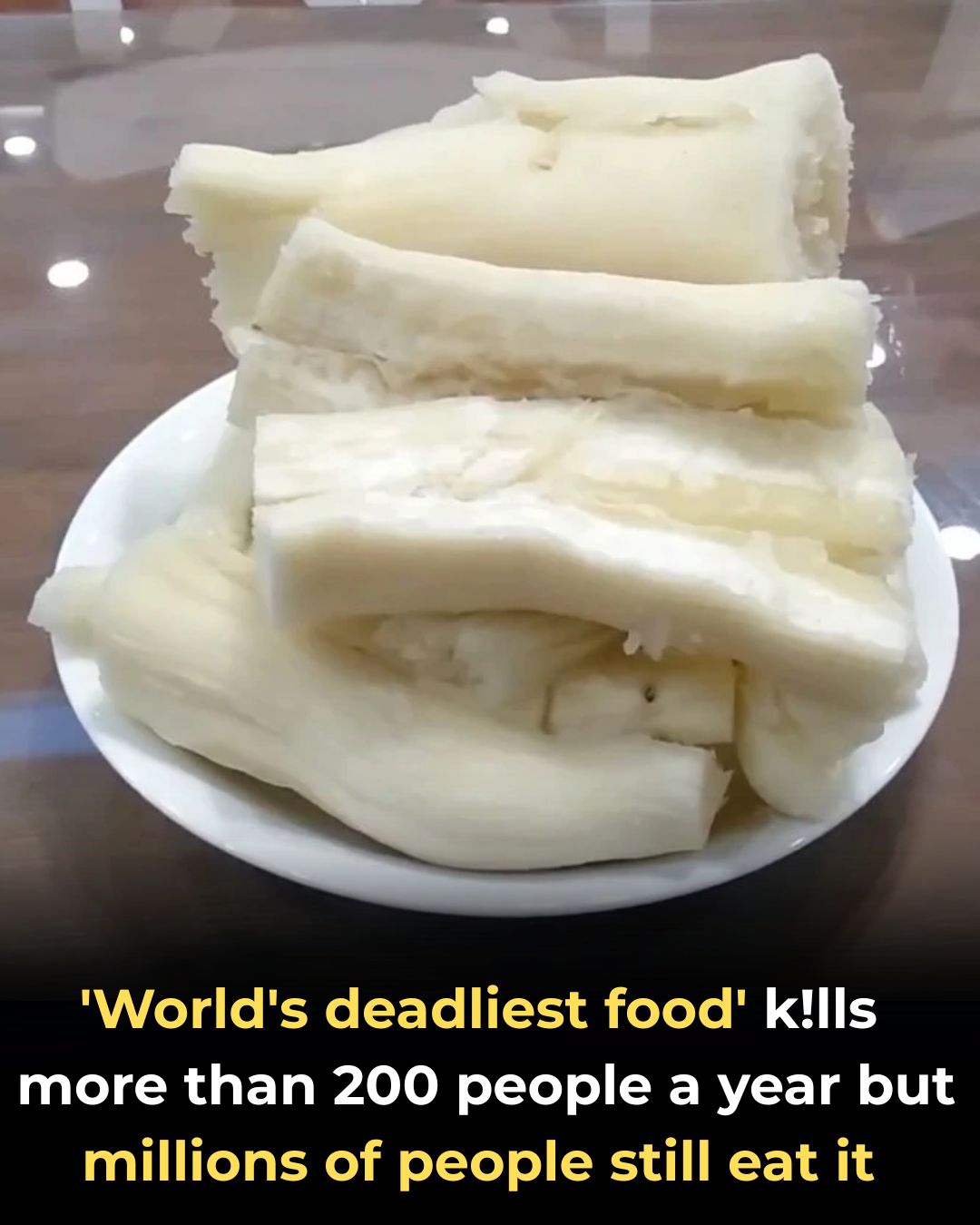
🌿 It’s Cassava
Also known as manioc or yuca, cassava is a major staple for nearly half a billion people across Africa, Asia, and Latin America.
🚨 Why Can Cassava Be Dangerous?
Cassava naturally contains compounds called cyanogenic glycosides. When eaten raw or improperly prepared, these chemicals can release cyanide in the body.
If consumed in large amounts without proper processing, it can lead to:
• Severe poisoning
• Vomiting and dizziness
• Breathing problems
• Paralysis
• In rare cases, death
The World Health Organization has linked poorly processed cassava to outbreaks of poisoning in vulnerable communities.
🧠 A Condition Called Konzo
Long-term consumption of improperly prepared bitter cassava has been associated with Konzo, a neurological disorder that causes sudden and permanent leg paralysis.
This typically occurs in areas facing:
• Food shortages
• Poor protein intake
• Limited access to proper processing methods
🥔 So Why Do So Many People Still Eat It?
Because cassava is:
✔ Affordable
✔ Drought-resistant
✔ Easy to grow
✔ High in calories
✔ A key survival crop in many regions
When properly prepared — peeled, soaked, fermented, dried, and thoroughly cooked — cassava is generally safe.
✅ How to Reduce the Risk
• Never eat raw cassava
• Avoid bitter varieties unless properly processed
• Soak and cook thoroughly
• Balance the diet with protein-rich foods
• Learn safe preparation methods
🌍 The Real Truth
Cassava is not “evil.” It becomes dangerous only when consumed improperly or during times of famine when safe preparation isn’t possible.
Millions safely consume cassava every day without issue.
🌟 The Bottom Line
The “world’s deadliest food” isn’t deadly by nature — it’s deadly when misused.
Knowledge, preparation, and proper nutrition make all the difference.
It sounds unbelievable — but the food in question is something many families rely on daily.
🌿 It’s Cassava
Also known as manioc or yuca, cassava is a major staple for nearly half a billion people across Africa, Asia, and Latin America.
🚨 Why Can Cassava Be Dangerous?
Cassava naturally contains compounds called cyanogenic glycosides. When eaten raw or improperly prepared, these chemicals can release cyanide in the body.
If consumed in large amounts without proper processing, it can lead to:
• Severe poisoning
• Vomiting and dizziness
• Breathing problems
• Paralysis
• In rare cases, death
The World Health Organization has linked poorly processed cassava to outbreaks of poisoning in vulnerable communities.
🧠 A Condition Called Konzo
Long-term consumption of improperly prepared bitter cassava has been associated with Konzo, a neurological disorder that causes sudden and permanent leg paralysis.
This typically occurs in areas facing:
• Food shortages
• Poor protein intake
• Limited access to proper processing methods
🥔 So Why Do So Many People Still Eat It?
Because cassava is:
✔ Affordable
✔ Drought-resistant
✔ Easy to grow
✔ High in calories
✔ A key survival crop in many regions
When properly prepared — peeled, soaked, fermented, dried, and thoroughly cooked — cassava is generally safe.
✅ How to Reduce the Risk
• Never eat raw cassava
• Avoid bitter varieties unless properly processed
• Soak and cook thoroughly
• Balance the diet with protein-rich foods
• Learn safe preparation methods
🌍 The Real Truth
Cassava is not “evil.” It becomes dangerous only when consumed improperly or during times of famine when safe preparation isn’t possible.
Millions safely consume cassava every day without issue.
🌟 The Bottom Line
The “world’s deadliest food” isn’t deadly by nature — it’s deadly when misused.
Knowledge, preparation, and proper nutrition make all the difference.