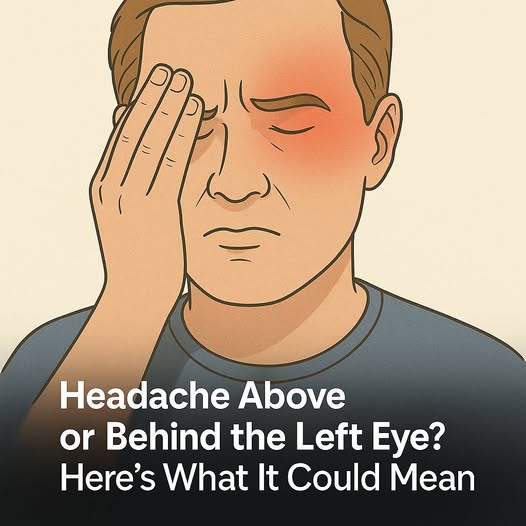
Pain above or behind one eye can feel sharp, throbbing, or like pressure. In many cases, it’s not dangerous — but the exact cause depends on the type of pain and other symptoms you may have. Here are the most common possibilities:
- Migraine
A migraine often causes one-sided head pain, frequently behind or above one eye. The pain is usually throbbing and may come with nausea, light sensitivity, sound sensitivity, or visual disturbances (auras). Migraines can last from a few hours to several days. - Cluster Headache
Cluster headaches cause intense, burning pain around one eye. The pain is severe and may be accompanied by a watery eye, nasal congestion, redness, or drooping eyelid on the same side. Attacks often happen in cycles and can wake you from sleep. - Sinus Headache
If you have pressure behind the eye along with facial pain, nasal congestion, or thick mucus, sinus inflammation may be the cause. Pain often worsens when bending forward. - Tension Headache
Although tension headaches usually affect both sides, they can sometimes feel stronger on one side. The pain is typically dull, tight, or pressure-like rather than sharp. - Eye Strain
Long hours on screens, poor lighting, or uncorrected vision problems can cause pain around or behind one eye. The discomfort may improve with rest. - Trigeminal Neuralgia
This condition causes sudden, sharp, electric-like facial pain that can radiate near the eye. It is less common but very intense. - High Blood Pressure
Severely elevated blood pressure can sometimes cause headaches, though it is not the most common symptom.
When to Seek Immediate Medical Help
Get urgent care if the headache:
• Is sudden and extremely severe (“worst headache of your life”)
• Comes with vision loss, confusion, weakness, or numbness
• Follows a head injury
• Is accompanied by fever and stiff neck
• Keeps getting worse over time
Most one-sided headaches are due to migraines, tension, or sinus issues, but persistent or unusual pain should be evaluated by a healthcare professional.
If this pain happens often, tracking when it occurs, how long it lasts, and what triggers it can help your doctor identify the cause and recommend the right treatment.