
Small white spots on the skin are common, especially on areas exposed to the sun like the arms and legs. In many cases, they are harmless — but understanding the cause can help you decide if you need treatment or just reassurance.
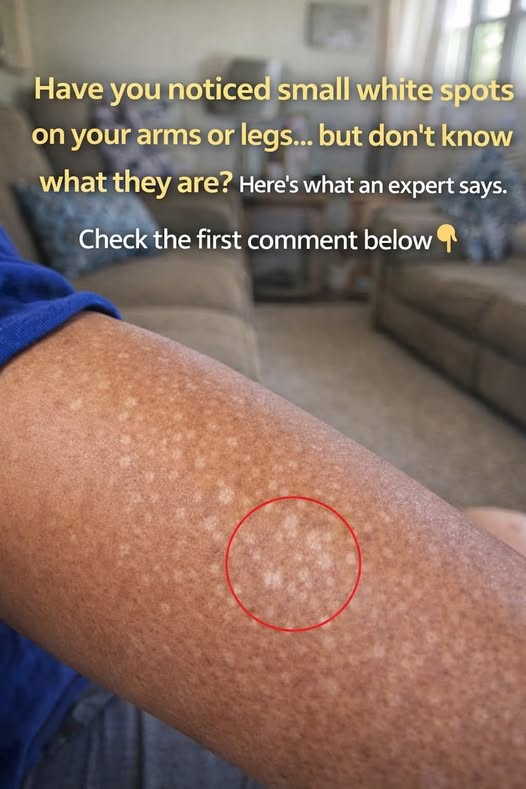
One very common cause is a condition called Idiopathic guttate hypomelanosis. These tiny white spots often appear in adults over 30 and are linked to long-term sun exposure. They are usually flat, round, and painless. They do not spread quickly and are not dangerous. Sun protection can help prevent new ones from forming.
Another possible cause is Tinea versicolor, a mild fungal infection that can create lighter or darker patches on the skin. These spots may be slightly scaly and sometimes itchy. Antifungal creams or medicated shampoos prescribed by a healthcare professional usually clear it up.
In some cases, white patches may be related to Vitiligo. This condition happens when the cells that produce pigment stop working. The patches are usually more clearly defined and may grow over time. Vitiligo is not contagious, but it does require medical evaluation for proper diagnosis and management.
Dry skin or minor post-inflammatory changes can also leave temporary light spots after healing from rashes, insect bites, or irritation.
When should you see a doctor?
If the spots are spreading quickly, changing shape, becoming itchy or painful, or if you notice other symptoms like fatigue or skin thickening, it is best to consult a dermatologist for a proper diagnosis.
Simple prevention tips include wearing sunscreen daily, moisturizing regularly, and avoiding excessive sun exposure. Healthy skin habits make a big difference over time.
Most small white spots are harmless and cosmetic, but getting the right diagnosis gives peace of mind and ensures proper care.