Many people suddenly notice small shapes drifting across their vision—tiny dots, squiggly lines, or cobweb-like shadows. These are called Eye Floaters, and they are often harmless. However, sometimes they can signal a problem that needs medical attention.
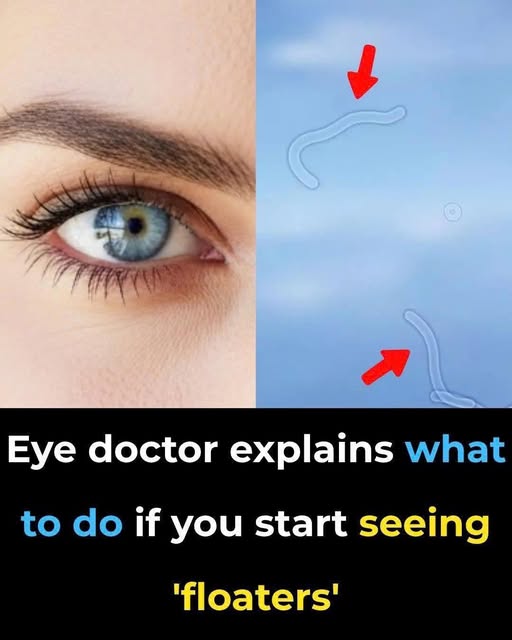
Here’s what eye specialists say you should know.
🧬 Why Floaters Appear
Inside the eye is a gel-like substance called the Vitreous Humor.
As people age, this gel slowly shrinks and forms tiny clumps. These clumps cast shadows on the retina, which appear as floaters in your vision.
Common causes include:
• Natural aging
• Nearsightedness
• Eye injury
• After eye surgery
⚠️ When Floaters Can Be Dangerous
Sudden floaters should not always be ignored. In some cases, they may be linked to Retinal Detachment, which requires immediate medical care.
Watch for these warning signs:
- A sudden increase in floaters
- Flashes of light in your vision
- A dark curtain or shadow over part of your eyesight
- Sudden blurred or reduced vision
If these happen, an eye doctor should examine your eyes right away.
👨⚕️ What You Should Do
If you notice floaters:
1️⃣ Move your eyes up and down — sometimes the floater drifts away from your line of sight.
2️⃣ Rest your eyes and avoid excessive screen time.
3️⃣ Schedule an eye exam if floaters persist or increase.
✅ The Good News
In most cases, floaters are harmless and common, especially with age. The brain often learns to ignore them over time.
But if they appear suddenly or worsen quickly, seeing an eye specialist quickly can protect your vision.