A brain tumor does not always start with dramatic symptoms. In many cases, the early warning signs are subtle and easy to ignore. Recognizing changes in your body and behavior early can make a critical difference. While many symptoms can be caused by less serious conditions, persistent or worsening signs should always be evaluated by a medical professional.
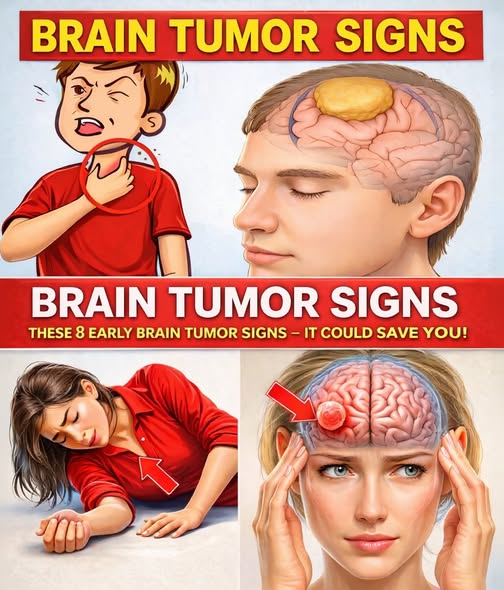
One serious condition to be aware of is Brain tumor, which occurs when abnormal cells grow in or around the brain. Because the brain controls everything from movement to memory, symptoms can vary depending on the tumor’s size and location.
Here are 8 early warning signs you should not ignore:
- Persistent or worsening headaches
Headaches linked to brain tumors are often different from typical tension headaches or migraines. They may be more severe in the morning, worsen over time, or become more frequent. They may also not respond well to usual pain medications. - Vision problems
Blurred vision, double vision, loss of peripheral vision, or sudden changes in eyesight can occur if pressure affects the optic nerves. - Seizures
A seizure in someone who has never had one before is a major warning sign. Even mild seizures, such as brief staring spells or sudden jerking movements, require immediate medical attention. - Personality or behavior changes
Sudden mood swings, confusion, memory problems, or changes in judgment may occur, especially if the tumor affects the frontal lobe. - Nausea and vomiting
Unexplained nausea or vomiting, especially in the morning and without digestive illness, can be caused by increased pressure inside the skull. - Weakness or numbness
Tingling, weakness, or loss of coordination in the arms or legs—especially on one side of the body—can signal neurological involvement. - Speech difficulties
Trouble finding words, slurred speech, or difficulty understanding others can develop if language areas of the brain are affected. - Balance problems
Frequent dizziness, clumsiness, or difficulty walking steadily may indicate issues in areas that control coordination.
It is important to understand that these symptoms do not automatically mean someone has a brain tumor. Many common conditions such as migraines, infections, stress, or vitamin deficiencies can cause similar signs. However, symptoms that are persistent, progressive, or unusual for you should never be ignored.
Early diagnosis improves treatment options and outcomes. If you or someone close to you experiences several of these symptoms together, or if one symptom is severe or sudden, seek medical care promptly.
Listening to your body and acting early could truly make a life-saving difference.