
As we get older, sleep position can affect more than comfort — it can influence breathing, circulation, and even stroke risk. Some experts warn that certain positions may put extra strain on the heart and blood vessels, especially after 60.
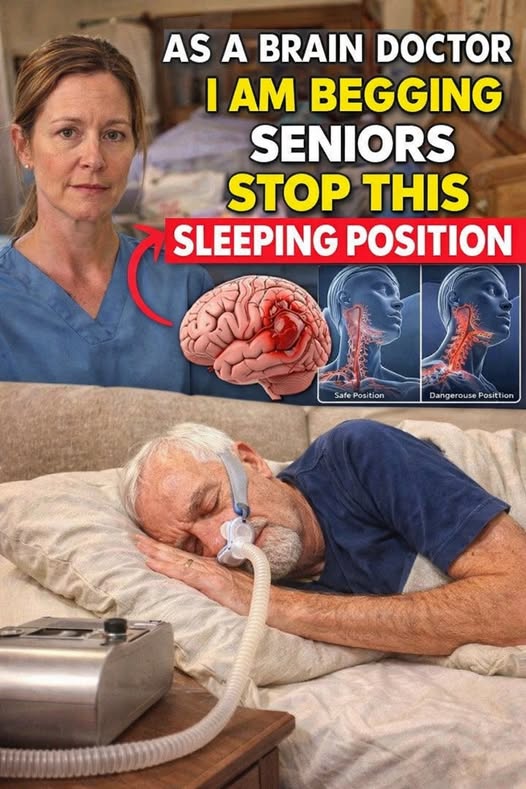
Here’s what seniors should know 👇
1️⃣ Sleeping Flat on Your Back (For Some People)
Sleeping on your back isn’t always bad — but for people with:
• Sleep apnea
• High blood pressure
• Obesity
• Heart disease
It can worsen breathing interruptions during the night.
One major concern is Obstructive sleep apnea (OSA). When lying flat, the tongue and soft tissues can collapse backward, blocking the airway. This leads to repeated drops in oxygen levels.
Low oxygen + spikes in blood pressure during the night = increased strain on the brain and heart.
Untreated sleep apnea is strongly linked to higher stroke risk.
2️⃣ Why Nighttime Is a High-Risk Period
Blood pressure naturally fluctuates during sleep. In some seniors, it may:
• Spike suddenly
• Drop too low
• Become unstable
If breathing is disrupted (like with sleep apnea), it can trigger stress hormones and increase clot risk.
3️⃣ The Safer Sleeping Position for Many Seniors
For people with breathing or heart concerns, side sleeping is often recommended.
Sleeping on the side may:
✔ Improve airflow
✔ Reduce snoring
✔ Lower apnea episodes
✔ Improve oxygen levels
Many specialists recommend the left side for those with heart concerns, as it may support circulation — though comfort and medical history matter most.
4️⃣ Warning Signs You Shouldn’t Ignore
⚠️ Loud snoring
⚠️ Gasping or choking during sleep
⚠️ Morning headaches
⚠️ Excessive daytime fatigue
⚠️ High blood pressure that’s hard to control
These may signal sleep apnea and should be evaluated by a doctor.
5️⃣ Simple Senior Sleep Tips
✔ Use a supportive pillow to maintain side position
✔ Maintain a healthy weight
✔ Avoid alcohol before bed
✔ Keep blood pressure well controlled
✔ Get screened for sleep apnea if you snore
The Bottom Line
There isn’t one “dangerous” sleeping position for everyone. But for seniors with untreated sleep apnea or cardiovascular disease, sleeping flat on the back may increase breathing disruptions — which can raise stroke risk over time.
The safest approach? Address underlying conditions and choose a sleep position that supports healthy breathing.