Headlines like this are designed to create fear. The truth is more balanced: vitamins do not usually “raise stroke risk overnight” when taken properly. However, in certain situations, high doses or misuse of supplements can increase health risks — especially in seniors.
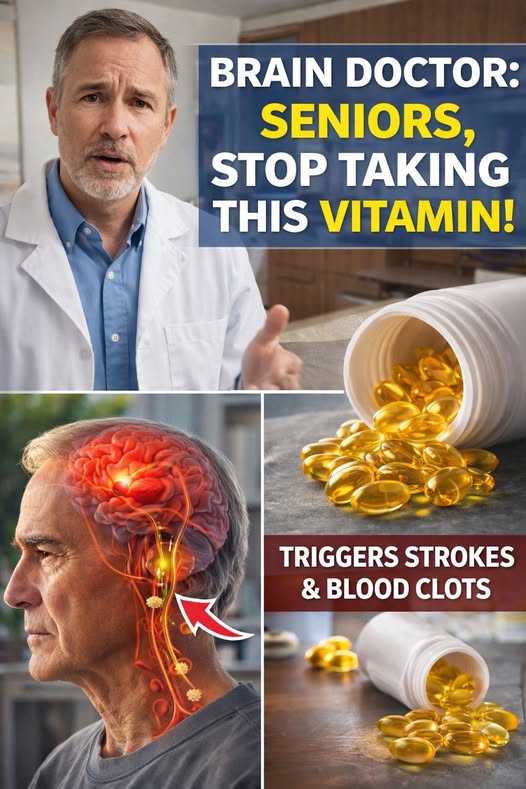
Stroke is commonly linked to Stroke, which happens when blood flow to part of the brain is blocked or when a blood vessel bursts. Risk factors include high blood pressure, diabetes, smoking, high cholesterol, and heart rhythm problems — not normal vitamin use.
So where does the concern come from?
One example often discussed is high-dose vitamin E. Some studies have suggested that very large doses of vitamin E supplements may slightly increase the risk of hemorrhagic stroke (bleeding in the brain). This does not mean vitamin E from food is dangerous. It refers to excessive supplemental doses taken without medical supervision.
Another example is vitamin K. While vitamin K itself does not cause stroke, it can interfere with blood-thinning medications such as Warfarin. Seniors taking blood thinners must manage vitamin K intake carefully to avoid clotting or bleeding complications.
Vitamin B6 and B12 are generally safe at recommended doses, but extremely high supplemental doses over long periods may cause nerve-related side effects — not sudden stroke.
The real issue is self-prescribing high-dose supplements without medical advice. Seniors are more sensitive because:
• Kidney function may be reduced
• Many take multiple medications
• Blood pressure regulation may already be fragile
Safe approach for seniors:
• Do not exceed recommended daily allowances unless prescribed
• Inform your doctor about all supplements
• Avoid megadoses marketed as “miracle cures”
• Focus on balanced nutrition from whole foods
If a senior experiences sudden weakness on one side of the body, confusion, slurred speech, severe headache, or vision problems, seek emergency care immediately — these are classic stroke warning signs.
Bottom line: Vitamins support health when used correctly. Problems arise from excessive, unsupervised use — not from normal, balanced intake. Smart medical guidance protects brain and heart health far better than fear-based headlines.