
Okra and guava leaves are often combined in traditional home remedies, especially in parts of Asia and Africa, where both plants are widely available. While this mixture is popular in natural health circles, it’s helpful to understand what each plant may actually contribute.
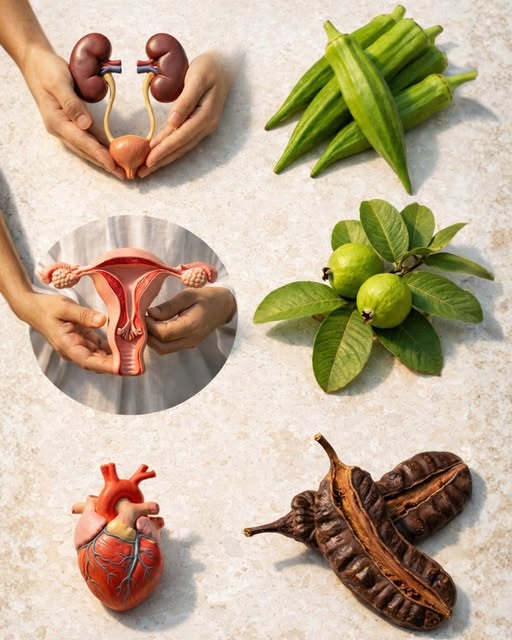
Okra (Abelmoschus esculentus) is known for its high soluble fiber content and its natural mucilage — the thick, gel-like substance released when it is soaked or cooked. This gel may help support smoother digestion and regular bowel movements. Because of its fiber, okra may also help slow the absorption of sugar in the digestive tract when eaten as part of meals.
Guava leaves from the guava plant (Psidium guajava) are traditionally used as an herbal tea. They contain plant compounds such as flavonoids and tannins, which have antioxidant properties. In folk medicine, guava leaf tea is commonly used for mild diarrhea, stomach discomfort, and digestive upset.
When paired together, people usually prepare them as a drink. A common method is to boil clean guava leaves in water for 10–15 minutes, then add sliced fresh okra and allow it to steep. Some prefer to soak sliced okra overnight in guava leaf tea and drink it in the morning.
Supporters of this combination claim it may:
• Help digestion
• Support blood sugar balance
• Reduce bloating
• Support heart health
However, while individual ingredients have been studied to a limited extent, there is no strong clinical evidence proving that the mixture itself treats or cures diseases. It should not replace prescribed medication for conditions like diabetes or high blood pressure.
For most healthy adults, drinking it occasionally as a mild herbal tea is generally considered safe. But anyone taking medication, especially for blood sugar or blood pressure, should consult a healthcare professional first to avoid possible interactions.
Traditional remedies can be part of a healthy lifestyle, but long-term wellness depends on balanced nutrition, regular movement, proper hydration, and appropriate medical care when needed.