
Endometriosis is a condition where tissue similar to the lining of the uterus grows outside the uterus. This tissue can attach to the ovaries, fallopian tubes, bladder, or other pelvic organs. Because the symptoms often overlap with normal period discomfort, many women ignore the warning signs for years. Early recognition is important to prevent complications and long-term pain.
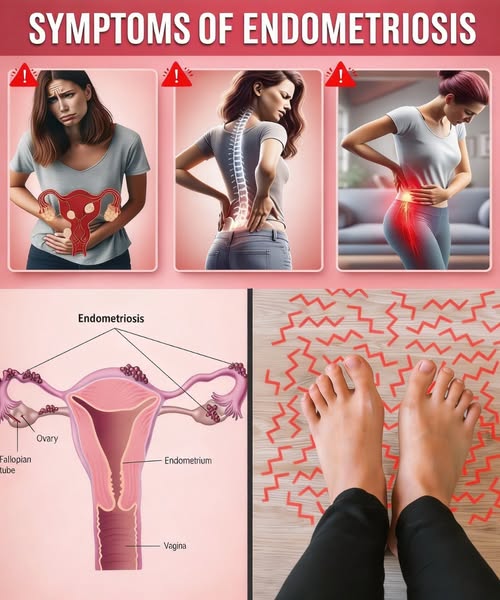
Here are 13 warning symptoms to watch for:
- Severe Menstrual Cramps
Painful periods that stop you from normal activities are not “just bad cramps.” The pain may begin days before your period and last several days. - Chronic Pelvic Pain
Ongoing pain in the lower abdomen or pelvis, even when you are not on your period, can be a major sign. - Heavy Menstrual Bleeding
Very heavy flow, large clots, or bleeding that lasts longer than a week should not be ignored. - Pain During Intercourse
Deep pain during or after intimacy is a common but often unspoken symptom. - Painful Bowel Movements
Pain when using the bathroom, especially during your period, may indicate tissue growing near the intestines. - Painful Urination
Discomfort while urinating during menstruation can occur if endometrial-like tissue affects the bladder. - Bloating
Many women describe “endo belly,” where the abdomen becomes swollen and tight, especially around menstruation. - Fatigue
Constant tiredness that doesn’t improve with rest is frequently reported. - Lower Back Pain
Persistent lower back or leg pain can happen if nerves in the pelvic area are affected. - Nausea
Some women experience nausea, especially during severe pain episodes. - Irregular Periods
Spotting between cycles or unpredictable bleeding patterns can be a sign. - Infertility
Difficulty getting pregnant is sometimes the first clue, as endometriosis can affect reproductive organs. - Digestive Problems
Diarrhea, constipation, or stomach cramps that worsen during your period may be linked to the condition.
Endometriosis symptoms can vary from mild to severe. Some women have intense pain, while others have very few symptoms but still experience fertility challenges. Because it can take years to diagnose, speaking to a healthcare professional if you notice ongoing or worsening symptoms is very important.
If you experience sudden severe pelvic pain, fainting, very heavy bleeding, or signs of infection, seek immediate medical care. Early evaluation and treatment options can significantly improve quality of life and help manage symptoms effectively.