A hiatal hernia happens when part of the stomach pushes up through the diaphragm into the chest cavity. Many people don’t even realize they have one, especially if it’s small. But when symptoms appear, they are often related to acid reflux and digestive discomfort. Recognizing the warning signs early can help you manage symptoms and prevent complications.
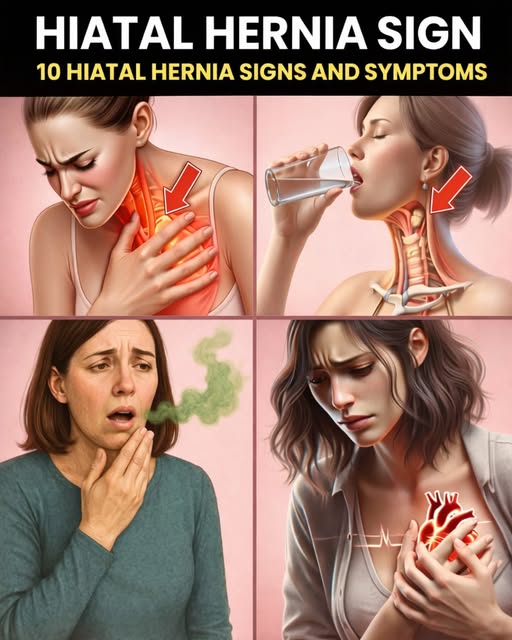
Here are 10 common signs and symptoms to watch for:
- Frequent Heartburn
A burning sensation in the chest, especially after eating or when lying down, is one of the most common signs. This happens because stomach acid moves up into the esophagus more easily. - Acid Reflux
You may feel sour or bitter fluid coming up into your throat or mouth. This can happen after meals or at night. - Chest Pain
Some people experience chest discomfort that can feel similar to heart-related pain. Always seek medical attention if chest pain is new or severe to rule out heart problems. - Difficulty Swallowing
A sensation of food getting stuck or slow swallowing can occur if the hernia affects the esophagus. - Chronic Cough
Ongoing coughing without a clear reason may be linked to acid irritating the throat and airways. - Hoarseness or Sore Throat
Stomach acid that reaches the throat can cause irritation, leading to voice changes or throat discomfort. - Bloating
You may feel unusually full or gassy after eating small amounts of food. - Belching
Excessive burping can be a sign of trapped air and digestive pressure. - Nausea
Some individuals feel mild to moderate nausea, especially after large meals. - Shortness of Breath
In larger hiatal hernias, the stomach pressing into the chest cavity may make breathing feel uncomfortable.
Not everyone with a hiatal hernia will have symptoms. Small hernias are often discovered by accident during imaging tests. Symptoms are more common in larger hernias or when acid reflux becomes frequent.
Lifestyle changes can help reduce discomfort. Eating smaller meals, avoiding heavy meals before bed, maintaining a healthy weight, and elevating the head of the bed can all reduce pressure and reflux. Avoiding trigger foods such as spicy, fatty, or acidic items may also help.
If symptoms are severe, persistent, or accompanied by vomiting blood, black stools, or intense chest pain, seek medical care immediately. Early diagnosis and proper management can prevent complications and improve quality of life.