
Breast cancer is one of the most common cancers worldwide, but when detected early, treatment outcomes are often very successful. Knowing what to look for can make a life-saving difference. While not every symptom means cancer, any unusual or persistent change should be checked by a healthcare professional.
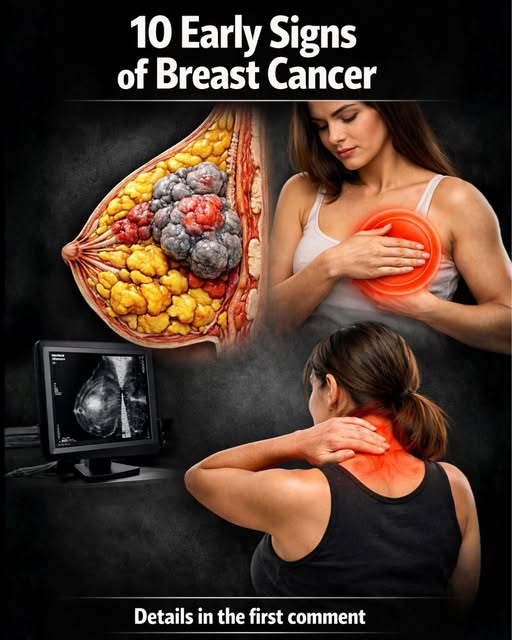
- A new lump in the breast or underarm. This is the most common early sign. Lumps are often painless, hard, and irregular, but some can be soft or tender.
- Swelling of all or part of the breast. Even if no lump is felt, unexplained swelling or thickening should not be ignored.
- Changes in breast size or shape. Sudden differences between breasts that were not there before can be a warning sign.
- Skin irritation or dimpling. Skin that looks like an orange peel or appears puckered may indicate changes beneath the surface.
- Redness or flaky skin on the breast or nipple. Persistent irritation, scaling, or crusting can be a sign of underlying issues.
- Nipple discharge that is not breast milk. Clear, bloody, or unusual discharge—especially from only one breast—should be evaluated.
- Nipple turning inward. A newly inverted nipple that was not previously inverted can be a concerning change.
- Breast or nipple pain. While breast cancer is not always painful, ongoing pain in one specific area should be checked.
- Swollen lymph nodes. Lumps or swelling near the collarbone or under the arm may signal that cancer has spread to nearby lymph nodes.
- Thickening in the breast tissue. A feeling that an area of the breast is different or denser than the surrounding tissue can be important.
It is important to remember that many breast changes are not cancer. Hormonal shifts, cysts, and infections can cause similar symptoms. However, early detection greatly increases survival rates.
Regular self-exams, clinical breast exams, and mammograms as recommended by your doctor are key tools in early detection. If you notice any unusual changes, do not wait. Prompt medical evaluation can provide reassurance or allow treatment to begin early when it is most effective.