
In the final stages of life, the body often goes through many natural changes. One of the lesser-known changes involves breathing and the nose, which can signal that the body is slowly shutting down.
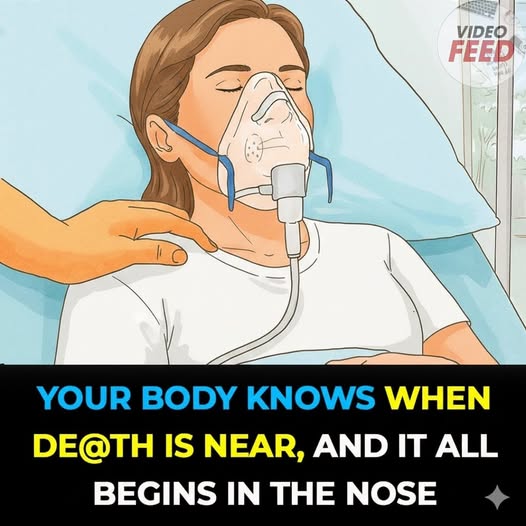
Doctors and caregivers who work in Palliative Care often notice several signs that may appear as the end of life approaches.
1️⃣ Changes in Breathing
A person may begin to breathe in an unusual pattern called Cheyne‑Stokes Respiration.
This pattern includes:
- Deep breaths followed by very shallow breathing
- Pauses between breaths
- Irregular rhythm
These changes happen because the brain is gradually losing its ability to control breathing normally.
2️⃣ A Distinct Change in Smell
As the body begins to shut down, metabolism slows and tissues break down. This can sometimes produce a distinct odor from the breath or nose.
Caregivers may notice this smell due to chemical changes occurring inside the body.
3️⃣ Reduced Sense of Smell
The person approaching the end of life may also lose their sense of smell because the brain and nervous system are slowing down.
4️⃣ The “Death Rattle”
Another sign sometimes heard near the end of life is the Death Rattle.
This sound occurs when a person can no longer clear saliva or mucus from the throat.
5️⃣ Slower Body Functions
Other changes often happen at the same time:
- Reduced appetite
- Extreme fatigue
- Cooler hands and feet
- Longer sleep periods
These are natural signs that the body is conserving energy.
✅ Important: These signs don’t always appear in every person, and they can vary widely. When they do occur, healthcare professionals focus on keeping the person comfortable and pain-free.