
Many people notice purple or bluish veins appearing on their legs, especially as they get older. These veins are often harmless, but sometimes they can signal circulation problems that shouldn’t be ignored.
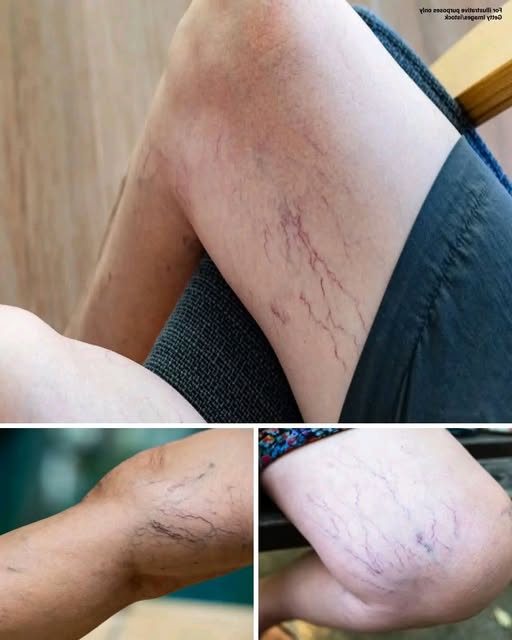
Here are some common reasons why purple veins may appear.
1️⃣ Spider Veins
The most common cause is a condition known as Spider veins. These tiny veins appear close to the skin’s surface and often look like purple or red web-like patterns.
They are usually caused by:
- Genetics
- Standing for long periods
- Hormonal changes
- Aging
2️⃣ Poor Circulation
Visible veins can sometimes be linked to circulation issues such as Chronic venous insufficiency.
When veins struggle to push blood back to the heart, blood may pool in the legs, making veins more visible.
Common signs include:
- Leg heaviness
- Swelling
- Aching or burning sensations
3️⃣ Varicose Veins
In some cases, purple veins may develop into larger, twisted veins called Varicose veins.
These occur when vein valves weaken and allow blood to collect in the veins.
4️⃣ Hormonal Changes
Hormones can affect blood vessels. That’s why spider veins are more common during:
- Pregnancy
- Menopause
- Hormonal treatments
5️⃣ Long Periods of Sitting or Standing
People who sit or stand for many hours may put extra pressure on the veins in their legs, which can make veins more visible over time.
🦵 When to See a Doctor
Seek medical advice if purple veins are accompanied by:
- Severe leg pain
- Swelling
- Skin discoloration
- Leg ulcers
These symptoms may require medical attention.
✅ Bottom line:
Purple veins on the legs are often spider veins or early varicose veins. While usually harmless, they can sometimes indicate circulation problems, so paying attention to changes in your legs is important.