
Ovarian cancer is often called a “silent disease” because early symptoms can be mild and easily mistaken for common digestive or hormonal issues. Recognizing persistent changes in the body can help with earlier diagnosis and treatment.
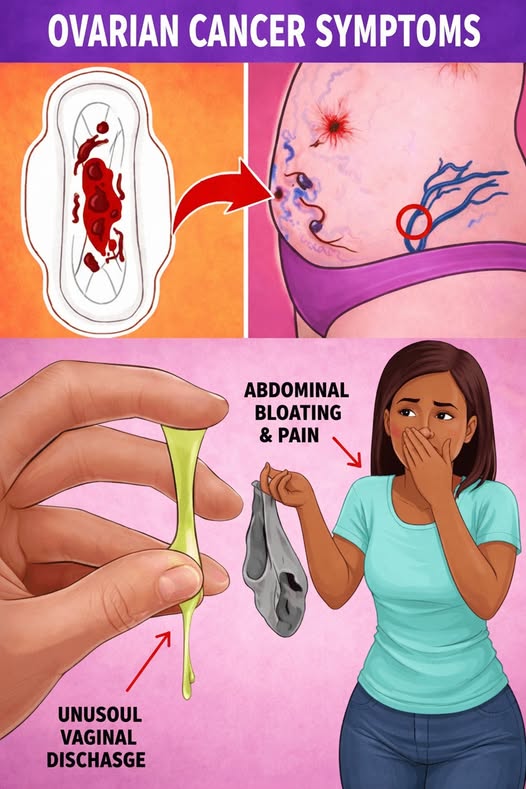
Below are 8 symptoms that women should pay attention to.
1️⃣ Persistent Bloating
Frequent or ongoing abdominal bloating that doesn’t go away may be an early sign. Many women mistake this for normal digestive issues.
2️⃣ Pelvic or Abdominal Pain
Ongoing pain or pressure in the pelvic area or lower abdomen can sometimes be related to ovarian problems.
3️⃣ Difficulty Eating or Feeling Full Quickly
Feeling full after eating small amounts of food may occur when the abdomen becomes affected.
4️⃣ Frequent Urination
Needing to urinate more often or feeling a constant urge to urinate can happen when pressure is placed on the bladder.
5️⃣ Changes in Bowel Habits
Persistent constipation, diarrhea, or other digestive changes may sometimes occur along with abdominal discomfort.
6️⃣ Unexplained Fatigue
Extreme tiredness that doesn’t improve with rest may appear as the body deals with illness.
7️⃣ Unusual Weight Changes
Unexpected weight loss or gain, especially around the abdomen, can be a warning sign.
8️⃣ Back Pain
Some women experience lower back pain that doesn’t have a clear cause.
⚠️ Why These Symptoms Are Often Missed
Many of these symptoms overlap with common conditions such as Irritable bowel syndrome or hormonal changes. Because of this, they may be ignored for months.
The key warning sign is persistence—symptoms that occur frequently and for several weeks.
🩺 When to See a Doctor
Consider medical advice if symptoms:
- Occur almost daily
- Last more than 2–3 weeks
- Become more severe over time
Early evaluation may include imaging tests or blood tests.
✅ Important reminder:
These symptoms do not always mean cancer, but recognizing unusual and persistent body changes can help detect serious conditions earlier and improve treatment outcomes.