
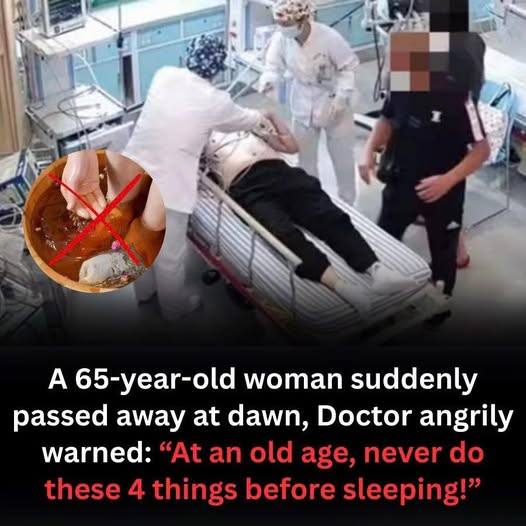
Headlines like this often sound dramatic, but doctors explain that sudden deaths usually involve underlying health problems combined with risky habits. Certain nighttime routines can increase strain on the heart, breathing, or digestion—especially in older adults.
Here are some bedtime habits that medical experts often warn about:
🍽️ 1️⃣ Going to Bed Right After a Heavy Meal
Eating a large meal late at night forces the body to work on digestion while you sleep. This can worsen Gastroesophageal Reflux Disease, disturb sleep, and increase discomfort or chest pain at night.
🍷 2️⃣ Drinking Alcohol Before Bed
Alcohol may make people sleepy, but it can disrupt sleep cycles and affect breathing and heart rhythm during the night.
Over time, this may contribute to heart and blood-pressure problems.
😴 3️⃣ Ignoring Signs of Sleep Apnea
Loud snoring, choking during sleep, or frequent waking can be symptoms of Sleep Apnea.
Untreated sleep apnea can increase the risk of serious conditions like Heart Attack and Stroke.
📱 4️⃣ Staying Up Late With Screens
Excessive phone or TV use late at night can interfere with sleep hormones and lead to poor sleep quality. Chronic sleep deprivation can affect heart health and blood pressure.
💊 5️⃣ Misusing Sleeping Pills
Taking strong sedatives without proper medical guidance can slow breathing and interact with other medications—something that can be especially risky for older adults.
✅ The key takeaway:
Doctors emphasize that sudden death is rarely caused by one habit alone. It usually results from existing health conditions combined with lifestyle factors. Maintaining healthy sleep habits, managing medical issues, and seeing a doctor for symptoms like chest pain, severe snoring, or breathing problems during sleep can help reduce risk.
💡 Healthy nighttime routines—like light dinners, limited alcohol, and consistent sleep—can make a big difference for long-term health.