
You may have heard claims that certain unusual body odors can signal cancer. While some cancers can cause noticeable changes, smell alone is not a reliable diagnostic sign.
According to the American Cancer Society and the National Cancer Institute, most cancers do not produce a specific smell in early stages. However, certain infections, tissue breakdown, or metabolic changes linked to advanced disease can create unusual odors.
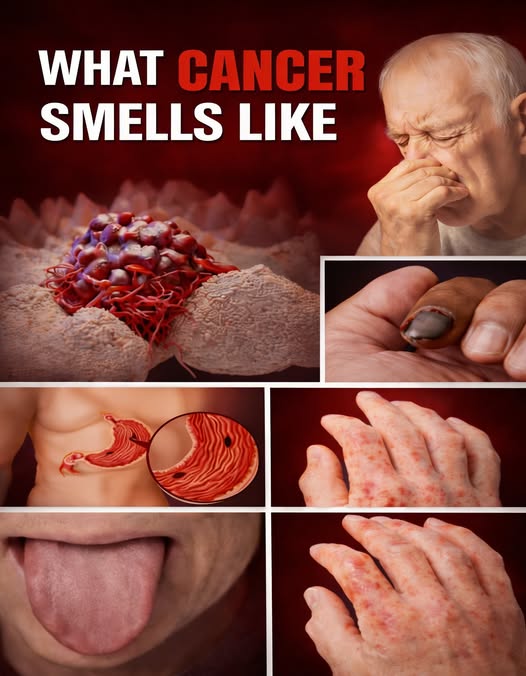
Here are situations people sometimes associate with serious illness:
1️⃣ Foul-Smelling Wound or Ulcer
Advanced skin or breast tumors that break through the skin may become infected and produce a strong odor.
2️⃣ Persistent Bad Breath
Chronic bad breath can sometimes be linked to oral infections or, rarely, oral cancers — but it is far more commonly caused by dental issues.
3️⃣ Unusual Vaginal Odor
A strong, persistent odor with abnormal discharge could signal infection. In rare advanced cases, cervical or uterine cancers may cause odor due to tissue breakdown.
4️⃣ Foul-Smelling Urine
More often caused by urinary tract infections — not cancer — but bladder issues should be evaluated if persistent.
5️⃣ Strong Body Odor With Unexplained Weight Loss
Metabolic changes from serious illness may alter natural body scent, though this is uncommon in early cancer.
6️⃣ Metallic or Chemical Smell on Breath
Some metabolic disorders or chemotherapy treatments can change breath odor.
7️⃣ Persistent Nasal Odor
Chronic sinus infections are common causes, but rarely tumors in nasal passages may lead to odor.
8️⃣ Rotting or Sweet-Smelling Discharge
Advanced, untreated tumors can sometimes produce odor due to necrotic (dead) tissue.
⚠️ Important Reality Check
Smell alone is not a reliable early warning sign of cancer. Most unusual odors are caused by:
• Infections
• Poor oral hygiene
• Hormonal changes
• Diet
• Medications
🚨 When to See a Doctor
Seek medical evaluation if unusual odors come with:
• Unexplained bleeding
• Persistent pain
• Lumps or swelling
• Unintended weight loss
• Fatigue
• Changes lasting more than 2–3 weeks
💡 The Bottom Line
There is no specific “cancer smell” you can depend on for early detection. Regular screenings, awareness of body changes, and timely medical care are far more reliable than relying on odor alone.
If something feels unusual or persistent, trust medical evaluation — not internet myths.