
Wakes up refreshed,Is deeply relaxed,Or something more serious?
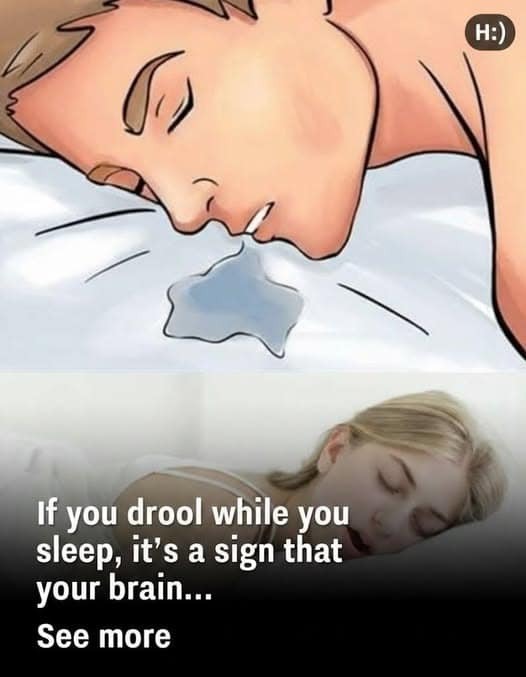
Drooling during sleep is common, and in most cases, it’s completely harmless. But sometimes it can point to underlying health issues. Let’s break down what it really means.
According to sleep specialists at the Cleveland Clinic and the Mayo Clinic, nighttime drooling (also called sleep-related hypersalivation) usually happens for simple reasons — not mysterious brain problems.
🧠 What’s Actually Happening?
When you fall into deep sleep:
• Your facial muscles relax
• Swallowing reflex slows down
• Mouth may fall open
• Saliva pools and escapes
This is often a sign you’re in a deep sleep stage, which is actually normal.
🌙 Common Reasons for Drooling During Sleep
1️⃣ Sleeping Position
Sleeping on your side or stomach makes saliva more likely to leak out.
2️⃣ Nasal Congestion
If your nose is blocked, you breathe through your mouth — leading to drooling.
3️⃣ Deep Sleep
Very relaxed muscles during REM and deep sleep can reduce automatic swallowing.
4️⃣ Acid Reflux
Gastroesophageal reflux may increase saliva production at night.
5️⃣ Certain Medications
Some medicines increase saliva production as a side effect.
⚠️ When It Could Be a Warning Sign
In rare cases, excessive drooling combined with other symptoms may signal:
• Neurological conditions
• Difficulty swallowing (dysphagia)
• Nerve or muscle disorders
• Severe sleep apnea
If drooling is severe, sudden, or paired with weakness, speech problems, or choking sensations — seek medical evaluation.
✅ Simple Ways to Reduce Drooling
• Sleep on your back
• Treat nasal allergies
• Improve sleep posture
• Practice good oral hygiene
• Consult a doctor if it’s excessive
💡 The Bottom Line
In most people, drooling while sleeping is simply a sign of deep relaxation — not brain damage or disease.
But if it becomes heavy, uncomfortable, or comes with other unusual symptoms, don’t ignore it. Your body always communicates — the key is knowing when to listen.