
Vitamin B12 is essential for your nervous system, brain function, and blood cell production. A deficiency can silently damage your body over time — and many people don’t realize it until serious symptoms appear.According to experts from the National Institutes of Health and the Mayo Clinic, vitamin B12 deficiency is more common than you think, especially in older adults, vegetarians, and those with digestive issues.
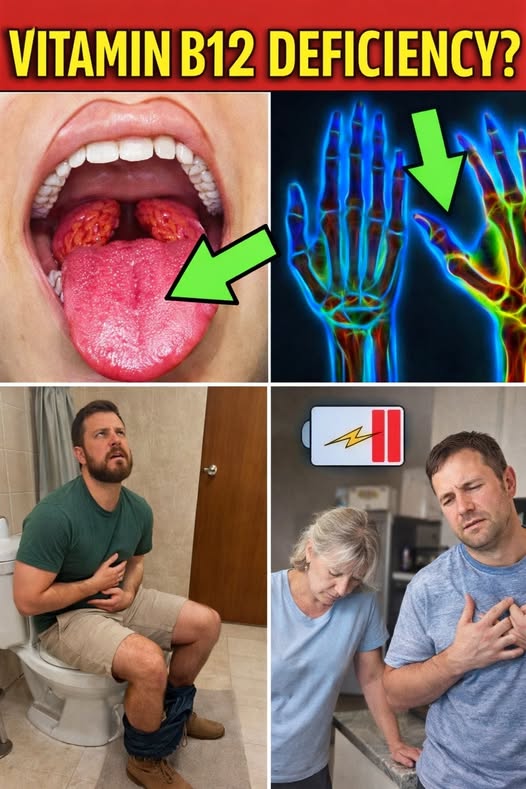
⚠️ Key Warning Signs of B12 Deficiency
1️⃣ Extreme Fatigue or Weakness
Feeling constantly tired despite enough sleep could be an early sign.
2️⃣ Numbness or Tingling
Pins-and-needles sensations in hands, feet, or legs can indicate nerve damage caused by low B12.
3️⃣ Memory Problems or Brain Fog
Difficulty focusing, forgetfulness, and confusion are common neurological symptoms.
4️⃣ Pale or Jaundiced Skin
Low B12 can reduce red blood cell production, making your skin pale or slightly yellow.
5️⃣ Shortness of Breath and Dizziness
Anemia caused by B12 deficiency can make you feel faint, lightheaded, or breathless during minimal activity.
6️⃣ Mood Changes
Depression, irritability, or sudden mood swings may be linked to low B12 levels.
7️⃣ Glossitis and Mouth Sores
Swollen, inflamed tongue or recurring mouth ulcers are classic signs.
🌿 How to Protect Yourself
- Include B12-rich foods like eggs, fish, meat, dairy, and fortified cereals.
- Consider B12 supplements if recommended by a doctor, especially for vegetarians or those over 50.
- Monitor your symptoms and get a blood test if you suspect deficiency.
⚠️ When to See a Doctor
If you notice any combination of these symptoms, don’t wait. Early detection can prevent permanent nerve damage and serious health complications.
Vitamin B12 deficiency is silent, but its consequences can be dangerous. Paying attention to your body and acting early can save your health.