
Pancreatic cancer is one of the most dangerous cancers because symptoms often appear late and can look harmless at first. The pancreas sits deep inside the abdomen, so early warning signs are easy to miss.
According to the American Cancer Society and Mayo Clinic, recognizing unusual changes early could make a difference.
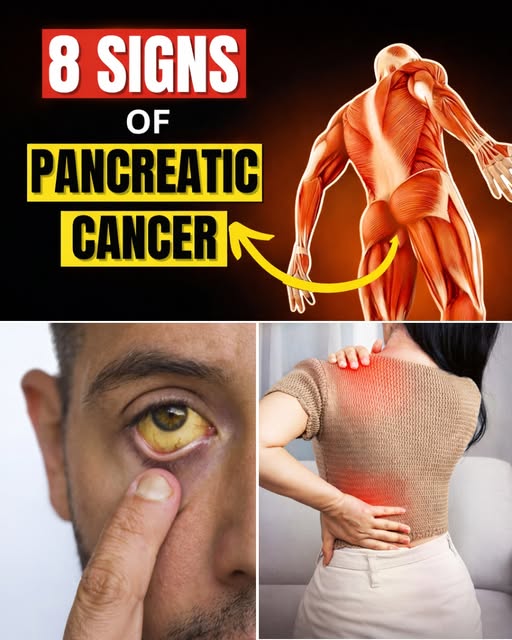
Here are 8 symptoms you should never ignore:
1️⃣ Yellowing of the Skin or Eyes (Jaundice)
If your skin or the whites of your eyes turn yellow, this may happen when a tumor blocks the bile duct.
You may also notice dark urine and pale stools.
This is often one of the first visible signs.
2️⃣ Unexplained Weight Loss
Sudden weight loss without dieting or increased exercise can be a red flag.
Pancreatic cancer can interfere with digestion and appetite, leading to rapid weight changes.
3️⃣ Persistent Upper Abdominal Pain
Pain in the upper abdomen that may spread to the back is common.
It might feel worse when lying down and improve when leaning forward.
4️⃣ Loss of Appetite or Feeling Full Quickly
You may feel full after eating small amounts or lose interest in food altogether.
This is sometimes dismissed as stress or stomach issues.
5️⃣ New-Onset Diabetes
If someone over 50 suddenly develops diabetes without typical risk factors, it could sometimes be linked to pancreatic problems.
The pancreas plays a key role in insulin production.
6️⃣ Oily or Greasy Stools
Stools that float, look greasy, or smell unusually strong may mean your body isn’t digesting fat properly due to pancreatic dysfunction.
7️⃣ Extreme Fatigue
Ongoing tiredness that doesn’t improve with rest can be a subtle but important warning sign.
8️⃣ Blood Clots
Unexplained blood clots, especially in the legs, may sometimes occur before other cancer symptoms appear.
Who Is at Higher Risk?
Risk factors include:
• Smoking
• Obesity
• Chronic pancreatitis
• Family history of pancreatic cancer
• Long-standing diabetes
The National Cancer Institute notes that early detection remains difficult, which is why awareness matters.
Important Reminder
Having one or even several of these symptoms does NOT automatically mean you have pancreatic cancer. Many of these signs can be caused by less serious conditions.
However, if symptoms persist for more than two weeks or worsen, seek medical evaluation promptly.
Early attention could save your life.