
HPV (human papillomavirus) is very common. Most HPV infections clear on their own and cause no symptoms. However, certain strains — especially HPV-16 — can infect the throat and may increase the risk of oropharyngeal cancer over time.
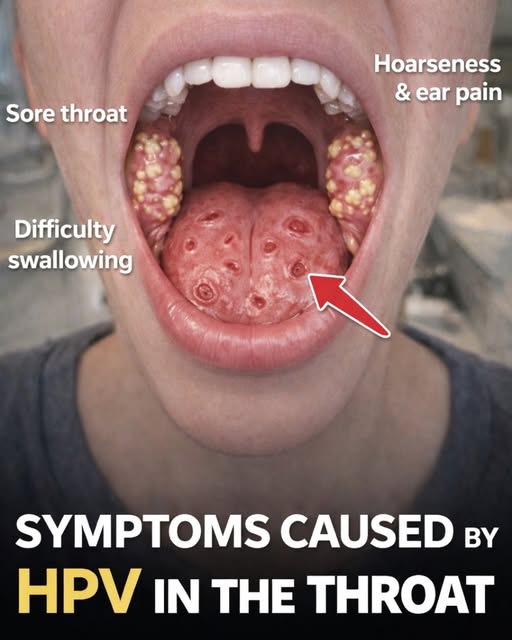
HPV in the throat often does not cause early symptoms. When symptoms do appear, they may include:
- Persistent Sore Throat
A sore throat that lasts for weeks and does not improve. - Difficulty Swallowing
Feeling like food is stuck or pain when swallowing. - Hoarseness or Voice Changes
Ongoing changes in your voice that do not resolve. - Lump in the Neck
Swollen lymph nodes can feel like a painless lump on one side of the neck. - Ear Pain (Usually One Side)
Pain in one ear without signs of infection can sometimes be referred pain from the throat. - Chronic Cough
A cough that does not go away. - Unexplained Weight Loss
Losing weight without trying can be a later warning sign. - Blood in Saliva
Rare, but should always be evaluated immediately.
Important to Understand
Most people with oral HPV have no symptoms and never develop cancer. HPV-related throat cancers typically develop slowly over years.
Risk Factors
• Oral sexual exposure
• Multiple partners
• Smoking
• Heavy alcohol use
• Weakened immune system
When to See a Doctor
See a healthcare professional if symptoms last longer than two to three weeks, especially if you have:
• A lump in the neck
• Persistent one-sided throat pain
• Ongoing voice changes
• Trouble swallowing
Early detection greatly improves outcomes.
Prevention
• HPV vaccination significantly reduces the risk of HPV-related cancers.
• Avoid tobacco use.
• Limit alcohol consumption.
• Maintain regular dental and medical checkups.
HPV in the throat is usually silent, but persistent, unexplained symptoms should never be ignored. If something feels unusual and does not go away, it’s best to get it checked.