
Stretch marks, also known medically as striae, are extremely common and completely normal. They appear as streaks or lines on the skin when it stretches quickly due to pregnancy, rapid weight changes, puberty, or muscle growth. Hormonal changes can also play a role.
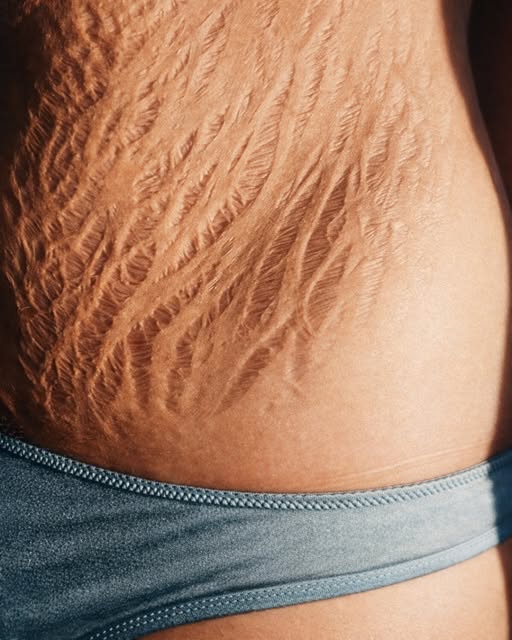
They usually start as red, pink, or purple lines and gradually fade to lighter, silvery marks over time.
Here’s what you should know:
Why They Happen
Stretch marks form when the skin stretches faster than collagen and elastin fibers can adapt. This causes tiny tears in the deeper layers of the skin. Genetics also influence how likely someone is to develop them.
Common Areas
• Abdomen
• Thighs
• Hips
• Breasts
• Lower back
• Upper arms
Can You Remove Them Completely?
There is no method that removes stretch marks 100% once they form. However, their appearance can fade significantly with time and certain treatments.
What May Help Improve Appearance
- Moisturizing Regularly
Keeping the skin hydrated supports elasticity. While moisturizers don’t prevent stretch marks completely, they may reduce dryness and irritation. - Retinoid Creams
Prescription retinoid creams can help improve early stretch marks (red or pink ones). These should not be used during pregnancy. - Hyaluronic Acid
Some studies suggest hyaluronic acid creams may improve early-stage marks. - Laser Treatments
Dermatological procedures such as laser therapy can help stimulate collagen production and reduce visibility. - Gradual Weight Changes
Avoiding rapid weight gain or loss may reduce new stretch mark formation.
Important Reminder
Stretch marks are not a health problem. They are a natural skin response to change. Nearly 80–90% of women experience them at some point in life.
Social media often promotes “miracle oils” or “instant removal” treatments, but realistic expectations are important. Improvement takes time, and complete removal is not possible without medical procedures — and even those may not erase them entirely.