
Blocked arteries in the legs are usually a sign of Peripheral artery disease (PAD). This condition happens when fatty deposits build up in the arteries, reducing blood flow to the lower body. It is closely linked to Atherosclerosis and increases the risk of heart attack and stroke.
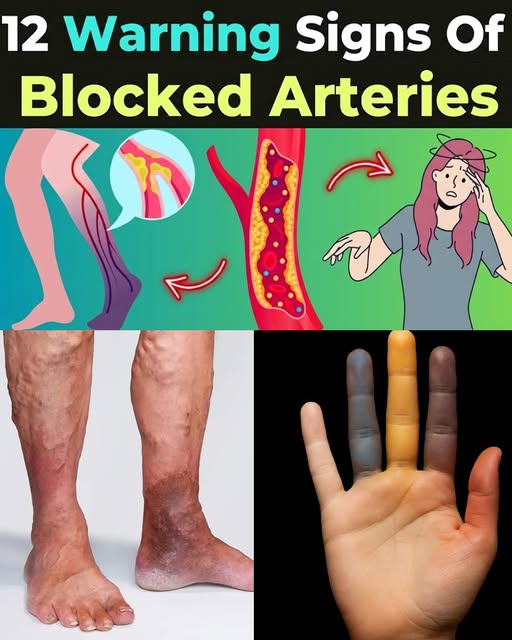
Here are 7 warning signs you should never ignore:
- Leg pain when walking (claudication)
Cramping, aching, or heaviness in the calves, thighs, or buttocks that starts during walking and improves with rest is one of the most common symptoms. - Cold feet or lower leg
If one foot feels noticeably colder than the other, it may signal reduced blood circulation. - Numbness or weakness
Poor blood flow can cause tingling, numbness, or weakness in the legs. - Slow-healing sores on toes or feet
Wounds that heal very slowly — or not at all — can be a serious sign of poor circulation. - Shiny skin or color changes
Skin on the legs may look pale, bluish, or shiny. Hair growth may slow or stop in the affected area. - Weak or absent pulse in the feet
A doctor may notice a reduced pulse in the foot arteries during examination. - Pain at rest (advanced stages)
In more severe cases, leg or foot pain may occur even while resting or lying down, especially at night.
Who is at higher risk?
• Smokers
• People with diabetes
• Those with high blood pressure
• Individuals with high cholesterol
• Adults over 50
PAD is often silent in early stages. If you notice these symptoms, early medical evaluation is important. Treatment may include lifestyle changes, medication, and in some cases procedures to restore blood flow.
Warning: Sudden severe leg pain, pale or blue skin, and inability to move the leg require emergency care.
Your legs can reveal important clues about your heart and blood vessel health. Paying attention early can prevent serious complications later.