Breast cancer is one of the most common cancers affecting women around the world. Early detection greatly increases survival rates, so knowing the warning signs can truly save lives. While not every breast change means cancer, certain symptoms should never be ignored and should be checked by a healthcare professional as soon as possible.
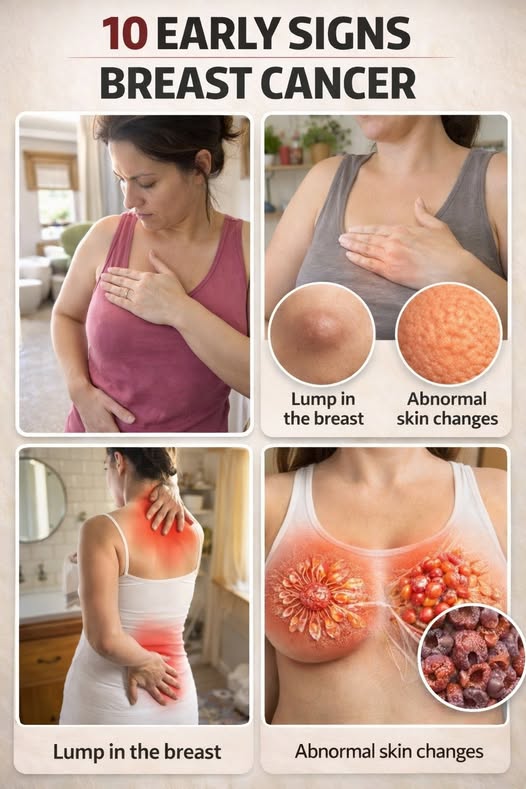
Here are 10 warning signs of Breast cancer every woman should be aware of:
- A new lump in the breast or underarm. This is the most common symptom. Cancerous lumps are often hard, irregular, and painless, but some may feel tender or soft.
- Swelling in part or all of the breast. Even without a distinct lump, unusual swelling or heaviness should be evaluated.
- Skin dimpling or puckering. If the skin starts to look like an orange peel, it may signal changes beneath the surface.
- Persistent breast pain in one specific area. Occasional soreness can be hormonal, but ongoing, localized pain deserves attention.
- Nipple turning inward suddenly. If the nipple was not previously inverted, this change should be examined.
- Redness, thickening, or scaliness of the nipple or breast skin. This may resemble a rash but does not improve with simple creams.
- Unusual nipple discharge, especially if it is bloody or clear and happens without squeezing.
- Noticeable change in breast size or shape that develops over time.
- Swelling of lymph nodes under the arm or near the collarbone. Breast cancer can spread to nearby lymph nodes before a lump is obvious.
- Warmth and rapid inflammation of the breast. Rare forms like inflammatory breast cancer may cause redness and swelling without a clear lump.
It is important to understand that these signs do not automatically mean cancer. Benign cysts, infections, or hormonal changes can cause similar symptoms. However, only medical evaluation through physical exams and imaging tests such as mammograms or ultrasounds can determine the cause.
Regular self-checks, routine screenings based on age and risk factors, and quick action when changes are noticed can make a life-saving difference. If something feels unusual or different, trust your instincts and seek medical advice promptly.