
Let’s approach this carefully and factually.Cervical cancer is primarily caused by long-term infection with the Human papillomavirus (HPV) — a very common sexually transmitted virus.
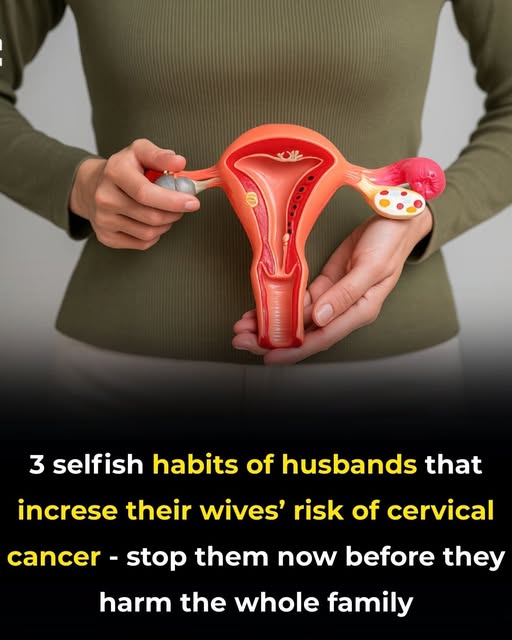
Men often carry HPV without symptoms, which means certain behaviors can increase a partner’s risk.
Here are 3 habits that can raise risk 👇
1️⃣ Having Multiple Sexual Partners Without Protection
HPV spreads through intimate skin-to-skin contact.
If a husband:
• Has multiple partners
• Does not use protection
• Engages in unprotected extramarital relationships
He increases the likelihood of bringing HPV into the marriage.
Persistent high-risk HPV strains are the main cause of cervical cancer.
2️⃣ Refusing HPV Vaccination or Ignoring Prevention
The HPV vaccine protects against high-risk strains of HPV linked to cervical cancer.
When men avoid vaccination or dismiss prevention, it reduces protection for both partners.
Vaccination is recommended for both males and females.
3️⃣ Avoiding Regular Health Checkups & STI Testing
Many men assume they’re “fine” because they have no symptoms.
But HPV usually causes no visible signs in men.
Skipping STI testing and medical checkups can unknowingly increase a wife’s exposure risk.
💡 Important Clarification
Cervical cancer risk is influenced by several factors:
• Persistent high-risk HPV infection
• Smoking
• Weakened immune system
• Lack of regular screening (Pap tests)
• Long-term untreated infections
It is not solely caused by a husband’s behavior — but certain behaviors can significantly increase risk.
🩺 What Protects Women
✔️ Regular Pap smears
✔️ HPV testing
✔️ HPV vaccination
✔️ Mutual monogamy
✔️ Condom use (reduces but does not eliminate risk)
Early detection dramatically improves outcomes.
💬 Final Thought
This isn’t about blame — it’s about awareness.
Cervical cancer is largely preventable when both partners take responsibility for sexual health.