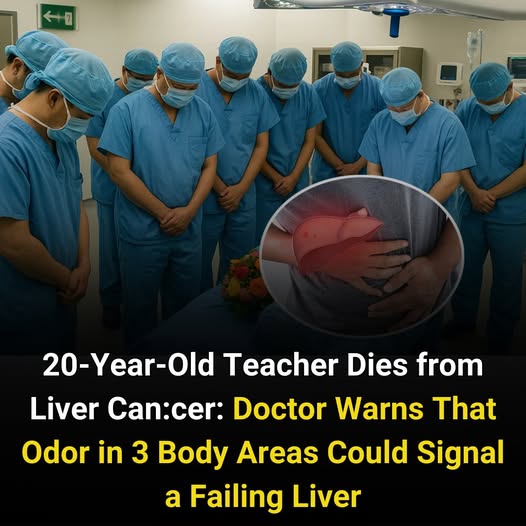
A tragic story like a 20-year-old teacher dying from liver cancer often makes headlines because it feels shocking and unexpected. But it’s important to separate emotional headlines from medical facts. Liver cancer usually develops silently over time, and early symptoms can be subtle.
One condition linked to advanced liver disease and sometimes liver cancer is Hepatocellular carcinoma, which often develops in people who already have chronic liver problems such as Cirrhosis or long-term hepatitis infections.
Doctors sometimes warn that certain unusual body odors can signal serious liver dysfunction. While odor alone does not diagnose cancer, it can be a warning sign of advanced liver failure.
Here are three body areas where odor changes may appear:
- Breath
A musty, sweet, or slightly rotten smell on the breath can be a sign of a condition called “fetor hepaticus.” This happens when the liver can no longer properly filter toxins from the blood. These toxins build up and are released through the lungs, changing the breath’s smell. - Urine
Dark, strong-smelling urine may occur when bilirubin levels rise. Bilirubin is a yellow pigment processed by the liver. If the liver is failing, bilirubin can build up in the blood and spill into the urine, making it darker and sometimes more pungent. - Skin and Sweat
When the liver cannot remove toxins effectively, some of them may be released through sweat glands. This can cause a stronger, unusual body odor. In advanced liver disease, people may also notice yellowing of the skin and eyes (jaundice), itching, easy bruising, and swelling in the abdomen.
However, odor changes are usually late signs. Earlier warning signs of liver trouble may include persistent fatigue, loss of appetite, unexplained weight loss, nausea, abdominal pain (especially on the right side), and yellowing of the eyes.
Risk factors for serious liver disease include chronic hepatitis B or C infection, heavy alcohol use, fatty liver disease related to obesity or diabetes, and family history of liver problems.
It’s important to understand that a single symptom rarely means cancer. Many mild conditions can also cause changes in body odor. But if odor changes are combined with other symptoms like jaundice, swelling, or unexplained weight loss, medical evaluation is essential.
Early detection makes a major difference. Regular checkups, liver function tests, avoiding excessive alcohol, maintaining a healthy weight, and treating viral hepatitis can significantly reduce the risk of liver cancer.