
Breast cancer is one of the most common cancers affecting women worldwide. Early detection greatly increases the chances of successful treatment, so it’s important to recognize the warning signs.
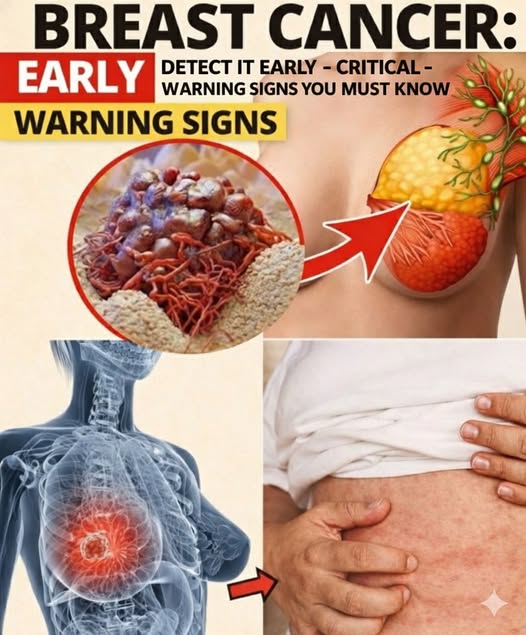
Here are 10 symptoms that should never be ignored.
1️⃣ A Lump in the Breast or Underarm
A new lump or thickened area in the breast or armpit is one of the most common signs. Not all lumps are cancer, but any new lump should be checked by a doctor.
2️⃣ Change in Breast Size or Shape
Noticeable swelling, shrinkage, or unusual changes in the shape of one breast may be a warning sign.
3️⃣ Skin Dimpling
If the skin of the breast starts to look like the surface of an orange peel, this could be a concerning symptom.
4️⃣ Nipple Changes
Changes such as the nipple turning inward (inversion), flattening, or moving position should be evaluated.
5️⃣ Unusual Nipple Discharge
Fluid leaking from the nipple—especially if it’s bloody or occurs without squeezing—should not be ignored.
6️⃣ Breast or Nipple Pain
Although breast cancer often doesn’t cause pain in early stages, persistent pain in the breast or nipple area should be examined.
7️⃣ Redness or Thickened Skin
Red, irritated, or thickened breast skin may sometimes indicate inflammatory breast conditions.
8️⃣ Swelling in the Breast
Swelling in part or all of the breast—even without a lump—can be a sign of underlying issues.
9️⃣ Swollen Lymph Nodes
Swelling or lumps in the armpit or near the collarbone may occur when cancer spreads to nearby lymph nodes.
🔟 Persistent Itching or Rash
An unusual rash or itching around the nipple or breast area could sometimes be associated with conditions like Paget’s disease of the breast.
🩺 When to See a Doctor
Consult a healthcare professional if you notice:
• A new lump or thickening
• Changes in breast appearance
• Persistent pain or discharge
• Skin changes that don’t go away
Early screening, including mammograms, can help detect changes before symptoms appear.
✅ Important reminder:
Many breast changes are not cancer, but it’s always best to check any unusual symptoms. Being aware of these warning signs can lead to earlier diagnosis and better treatment outcomes.